Introduction
In a world where art often bends toward trends, Rajasekharan Parameswaran stands out as an artist who remains deeply connected to his roots—both cultural and spiritual. A renowned Indian painter, Rajasekharan has not only mastered the traditional art of mural painting but has also achieved global recognition for his work. He holds a Guinness World Record for creating the largest hand-painted indoor mural, a feat that blends scale, skill, and sacredness.
Rajasekharan’s journey through art is a compelling story of dedication, discipline, and divine inspiration—one that bridges centuries-old traditions with modern relevance.
Early Life and Inspiration
Born in Kerala, a land synonymous with temple art, classical dance, and storytelling, Rajasekharan grew up immersed in the rich tapestry of South Indian culture. His fascination with ancient murals, especially those adorning temple walls, began in childhood. As he explored the depths of Indian mythology and classical literature, his desire to express those stories through visual form took root.
From early on, Rajasekharan realized that art for him was not just about form and color—it was about narrative, energy, and the sacred. His deep admiration for the Kerala mural tradition, coupled with a passion for preserving India’s spiritual heritage, shaped his lifelong artistic vision.
Training and Artistic Evolution
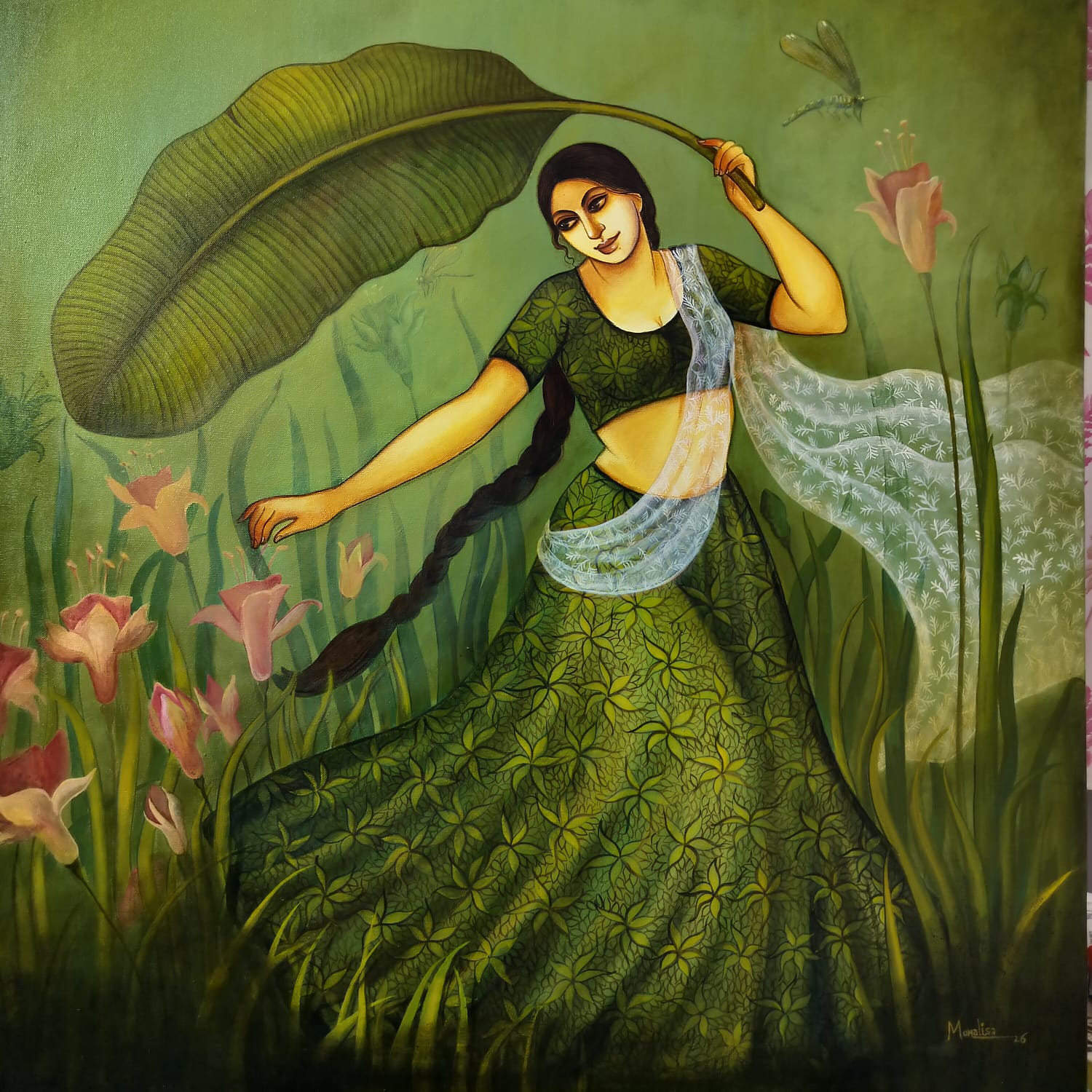
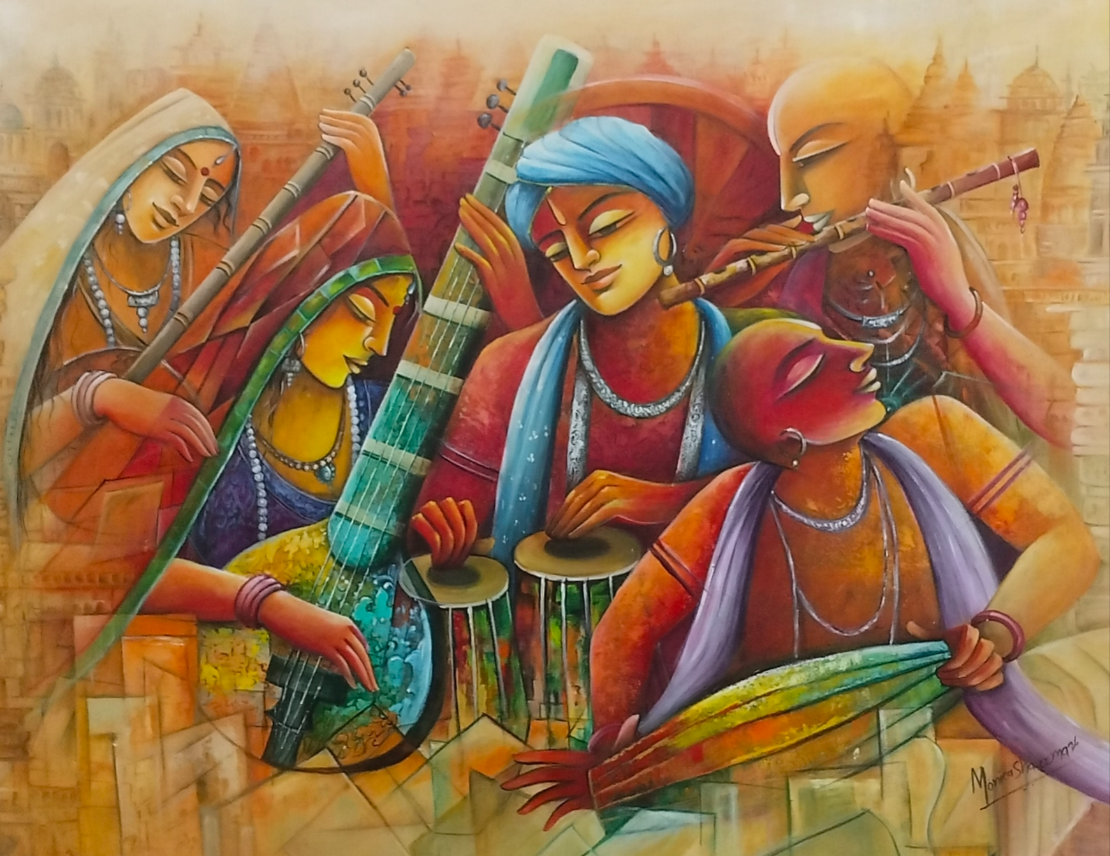
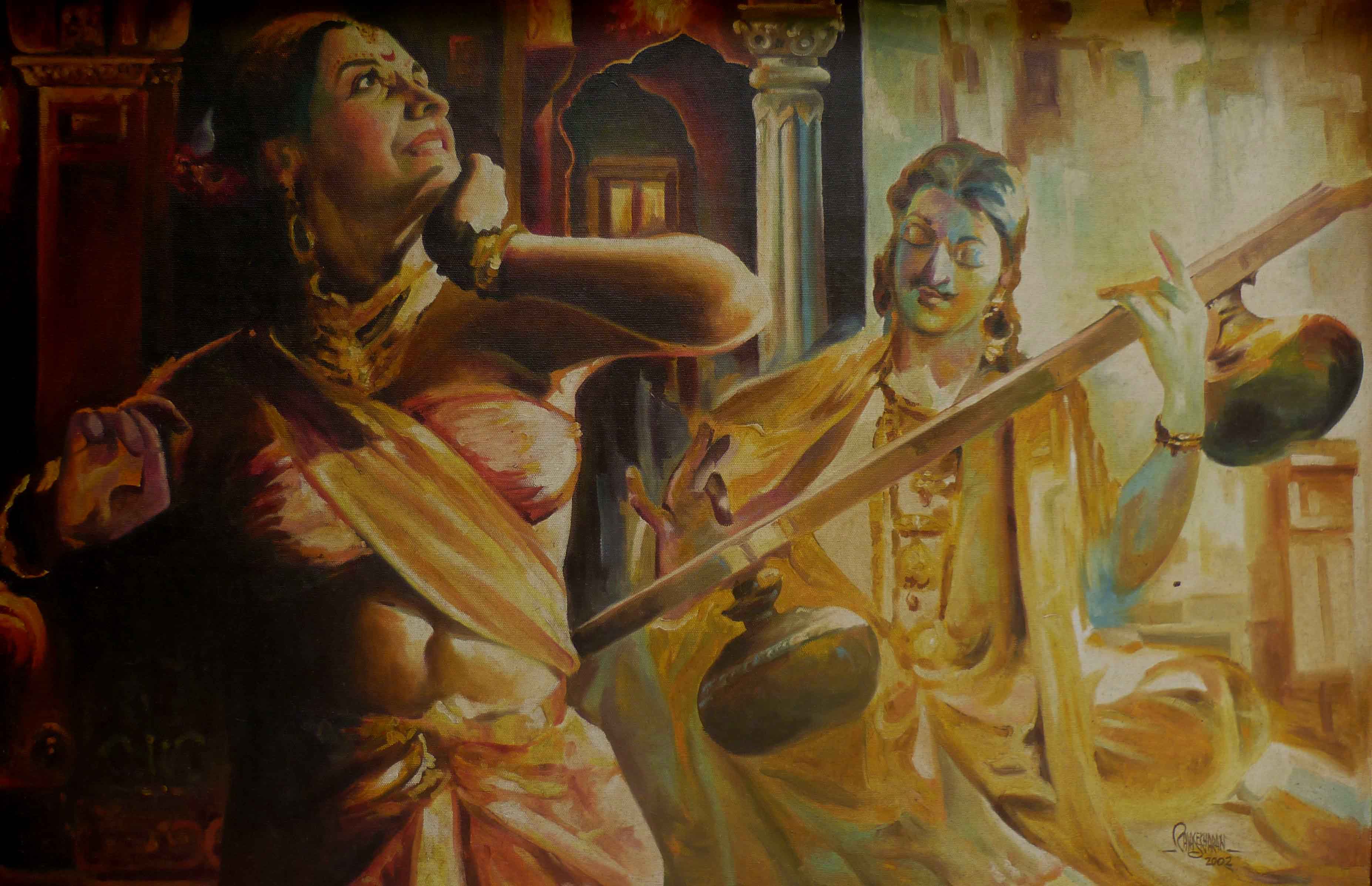
Rajasekharan’s formal education in fine arts provided a technical foundation, but his artistic journey was far more self-driven and philosophical. He studied the principles of iconography, ancient texts, and traditional symbolism. Over time, his style evolved to incorporate meticulously detailed figures, vibrant natural dyes, and mythological themes, creating works that feel timeless yet personally expressive.
Unlike many modern artists, he never distanced himself from tradition. Instead, he brought tradition forward—reviving and revitalizing it on a monumental scale.
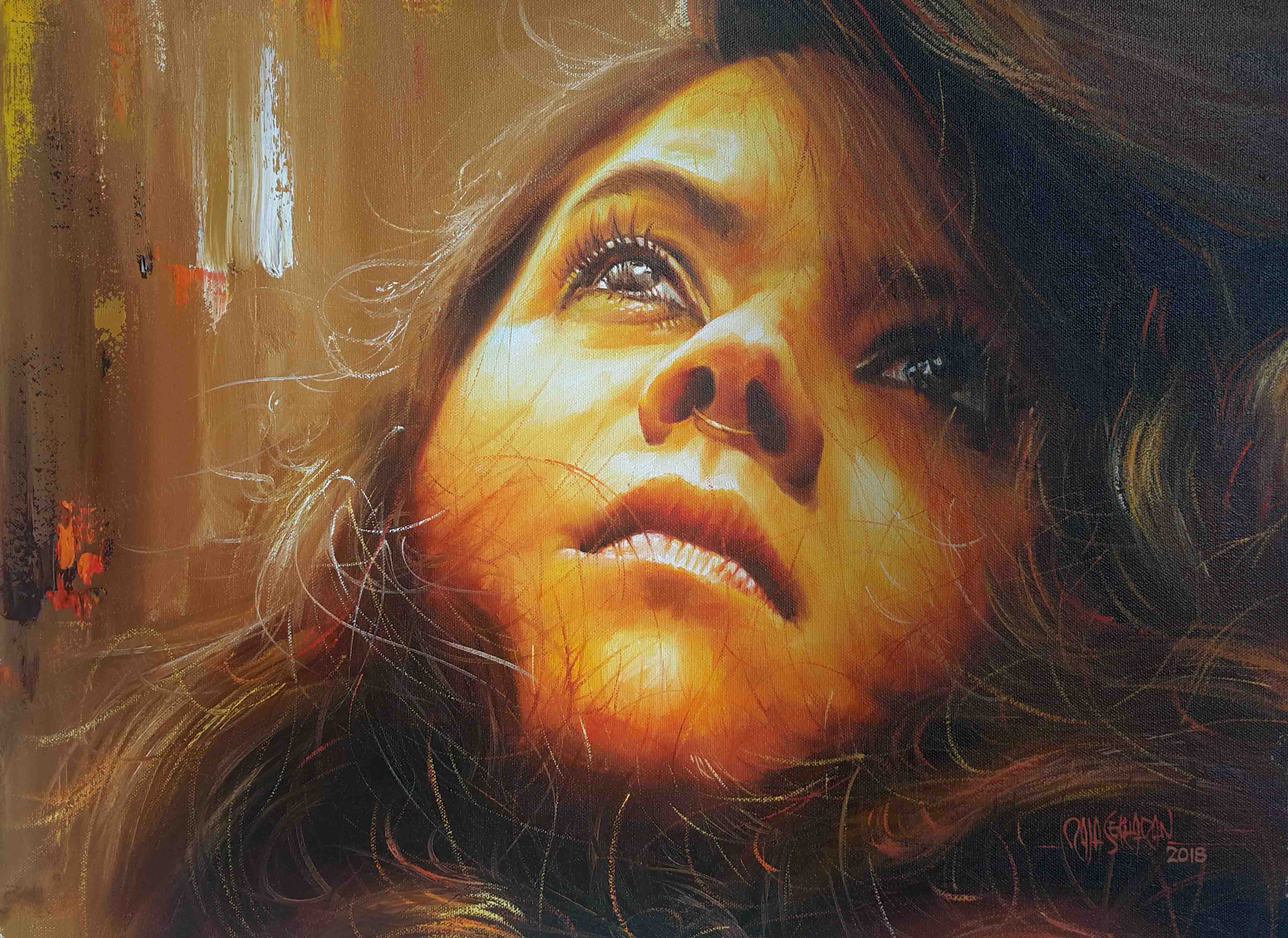
Waiting
The Guinness World Record
In 2005, Rajasekharan etched his name into history by creating the world’s largest hand-painted indoor mural at the Kozhikode Government Engineering College auditorium in Kerala. Covering 7,000 square feet, the mural depicts stories from the Mahabharata, bringing epic tales and characters to life across vast walls.
This was not just a test of artistic skill, but of endurance, vision, and commitment. Working tirelessly over months, often on scaffolding, Rajasekharan transformed the space into a temple of storytelling. The Guinness World Record recognized not just the size of the mural, but the cultural significance and dedication it embodied.
Themes and Philosophy in His Art
Rajasekharan’s paintings are deeply spiritual. They frequently draw on:
- Hindu epics like the Ramayana and Mahabharata
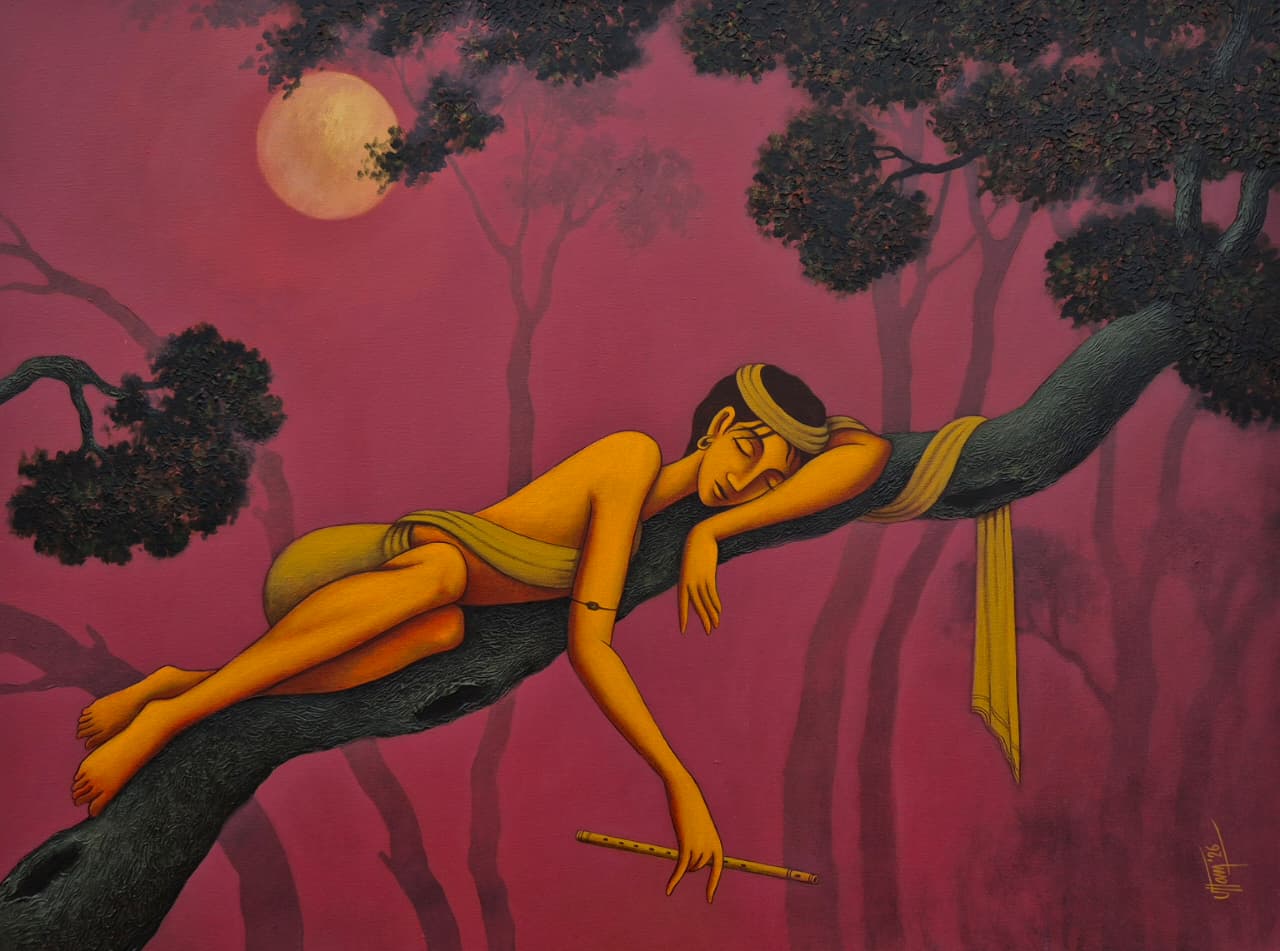
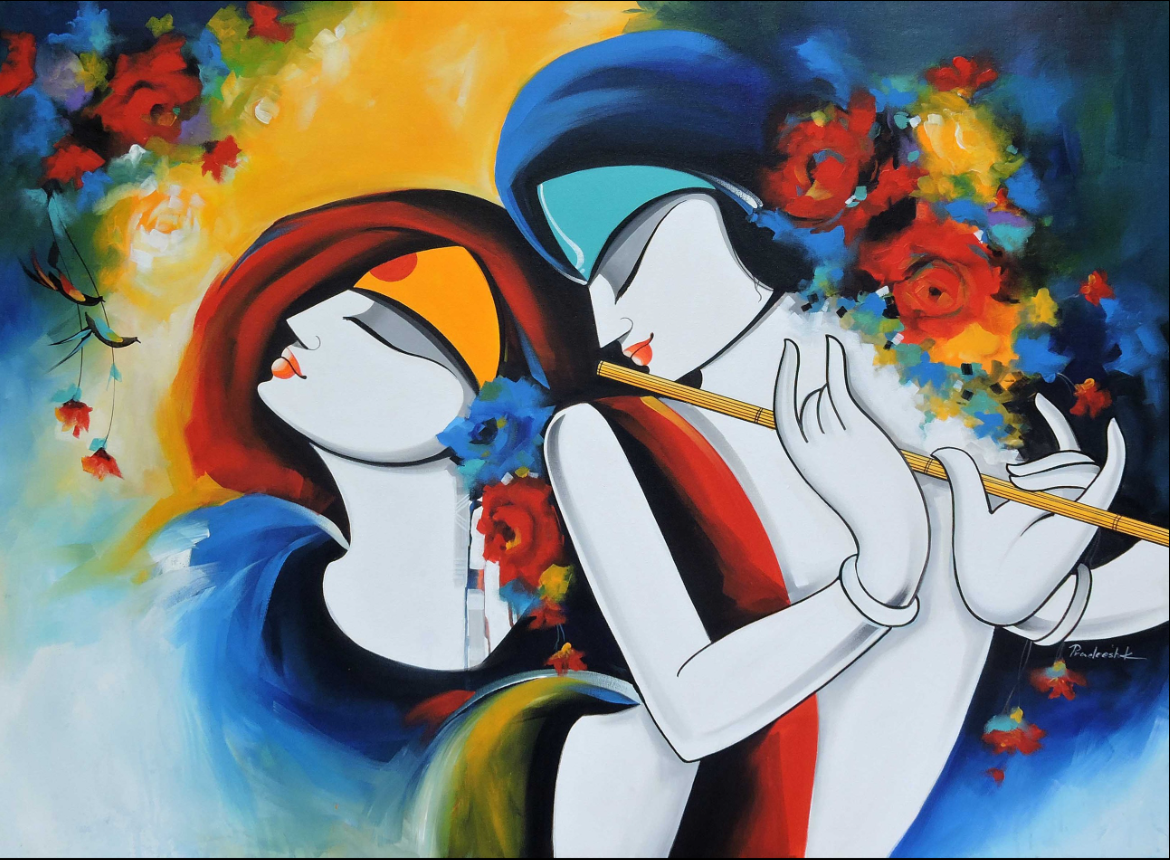
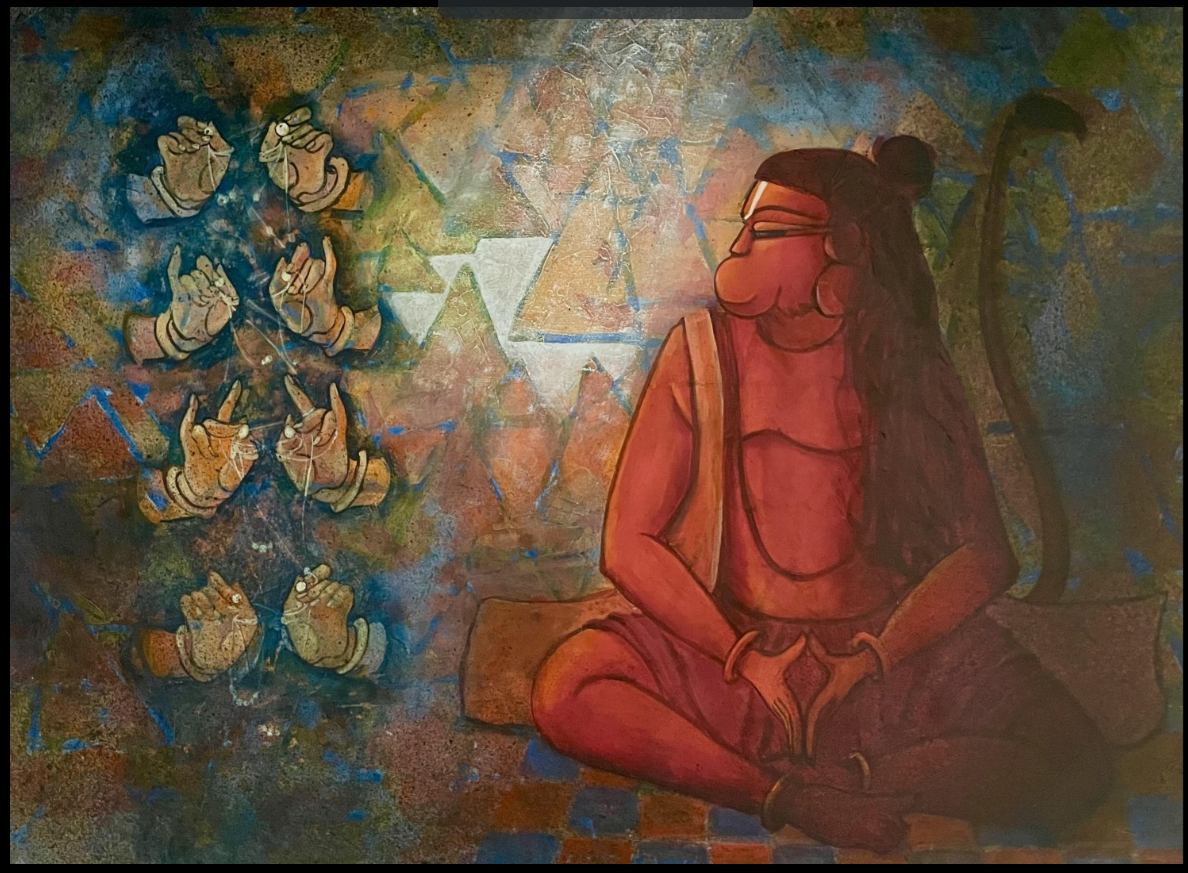
- Divine figures such as Krishna, Shiva, and Devi
- Symbolism from nature, including lotuses, serpents, and celestial motifs
- Philosophical elements of Vedanta and Bhakti
Every painting carries not just beauty but meaning—inviting viewers to contemplate, feel, and connect. His art is a form of meditation, not only for himself but also for those who experience it.
Recognition and Cultural Impact
Beyond the Guinness World Record, Rajasekharan Parameswaran has received national and international acclaim for his work. His murals adorn temples, institutions, and cultural spaces across India. He has also been a strong advocate for traditional Indian mural techniques, conducting workshops, lectures, and demonstrations to keep the ancient art alive.
His influence extends to a new generation of Indian artists who now look toward heritage not as a burden of the past, but as a source of living inspiration.
Art as a Spiritual Journey
For Rajasekharan, art is not performance—it’s prayer. His process is meditative, guided by inner stillness and philosophical clarity. He sees his work as a bridge between the material and the metaphysical, a visual offering that transcends the canvas.
This deep sense of purpose is what makes his journey so powerful. He is not just an artist, but a storyteller, philosopher, and cultural custodian.
Conclusion
Rajasekharan Parameswaran’s journey through art is a rare blend of tradition, devotion, and accomplishment. From the quiet temples of Kerala to the global recognition of a Guinness World Record, his life’s work is a testament to what happens when faith and creativity unite.
In preserving the sacred through paint and brush, Rajasekharan has done more than create murals—he has created living monuments to India’s soul.